Brad Bolman — who I had the pleasure of meeting just the second time a couple weeks ago at HSS Mérida — tipped me off on Bluesky to this wonderful painting by the German Realist painter Wilhelm Trübner (1851–1917), titled Caesar at the Rubicon.
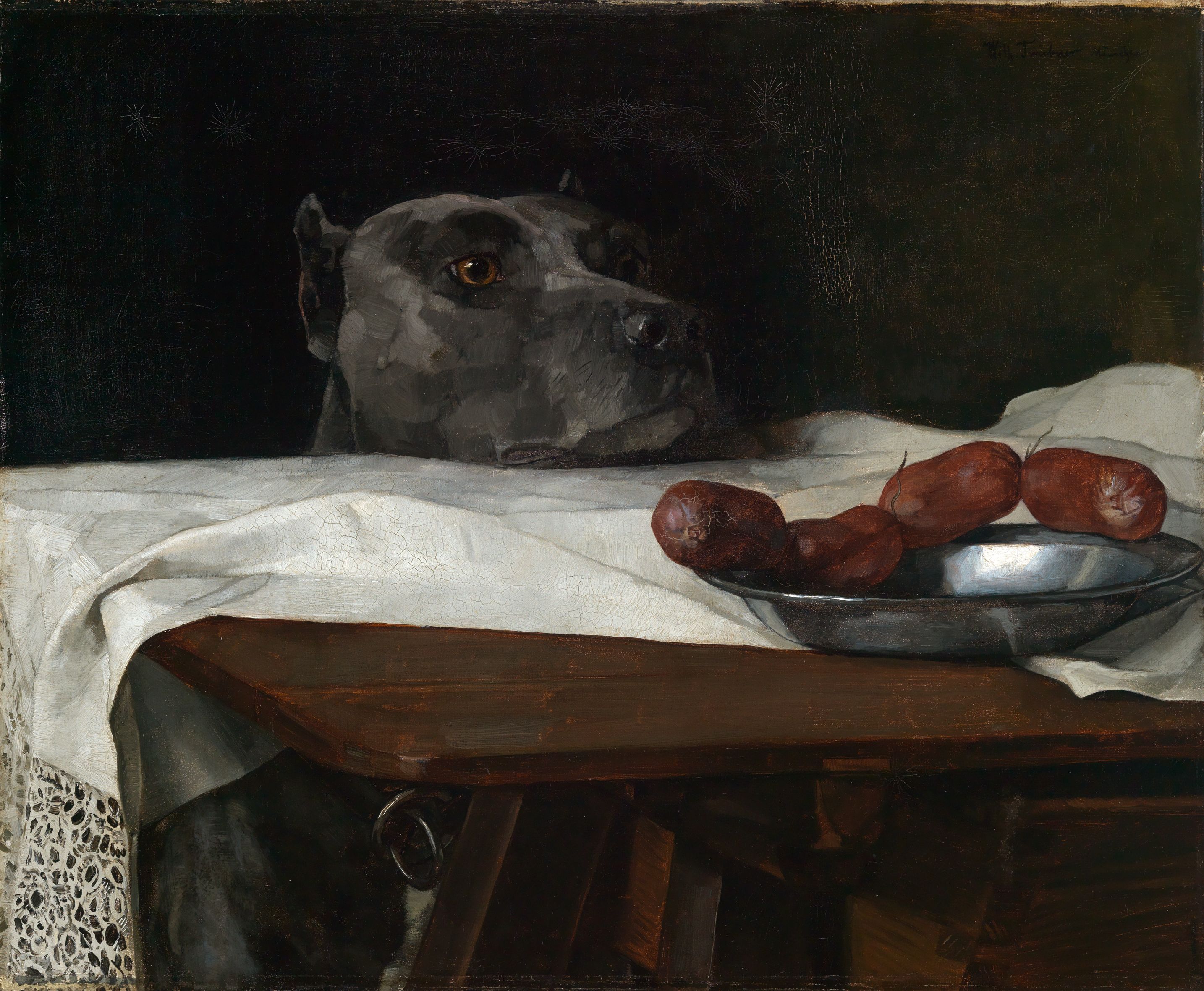
Caesar am Rubikon is held at the Staatliche Kunsthalle Karlsruhe (Inv. Nr. 899), which has an excellent website and has made a very high resolution digital copy freely available under the CC0 license.
I haven’t been to Karlsruhe Kunsthalle, but of course, as a resident of Berlin, I go to the Berlin State Museums all the time, and am therefore very familiar with Wilhelm Trübner’s other famous Great Dane portrait, Ave, Caesar, morituri te salutant.
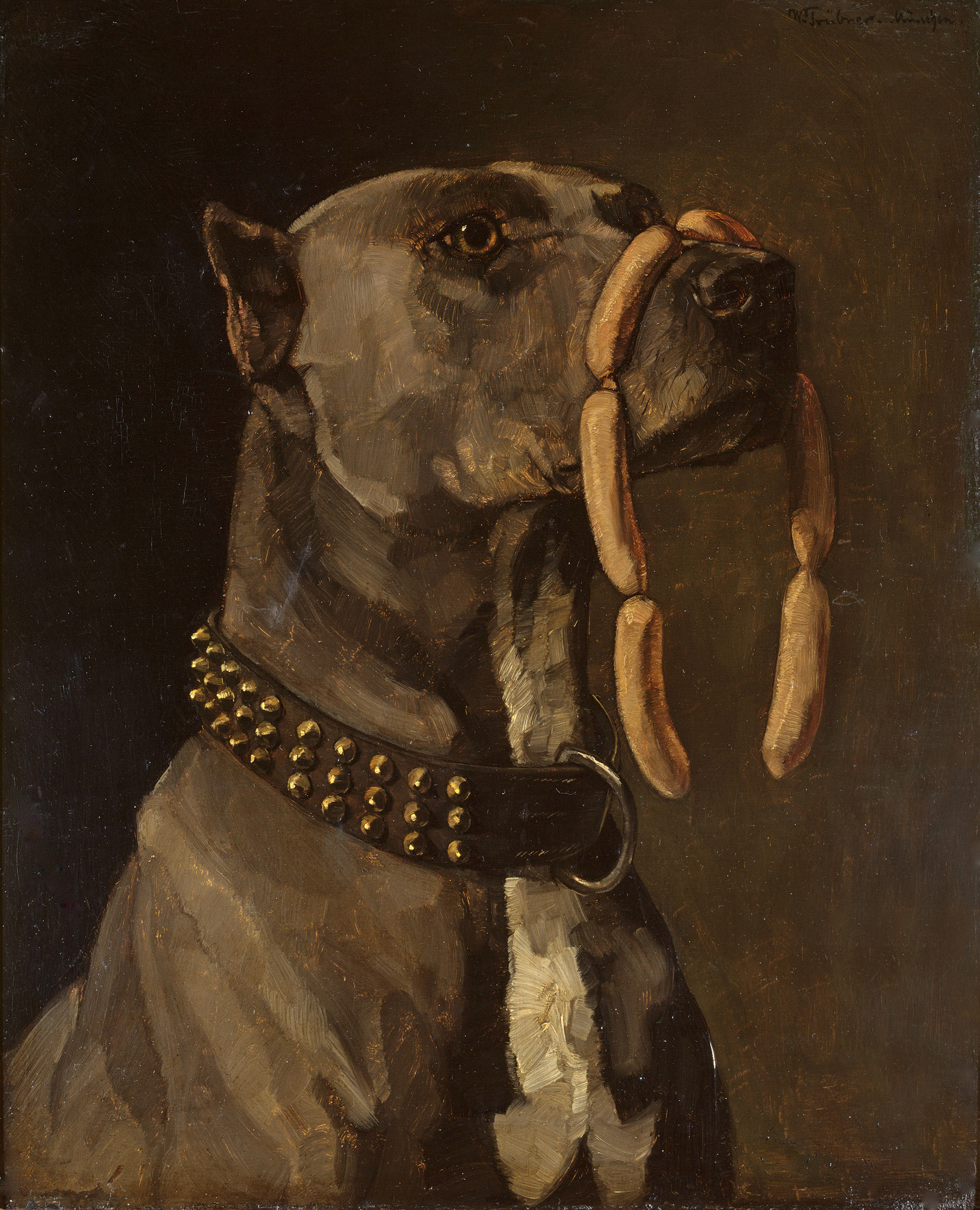
Ave, Caesar, morituri te salutant is usually on display at the Alte Nationalgalerie (Ident. Nr. A III 364), although the last time I went I didn’t manage to see it in the gallery itself; the Staatliche Museen Berlin make a lower-res image available under the CC PDM 1.0 license. I was so glad to learn today that what I had previously thought as just a weird, one-off painting was actually part of Trübner’s funny, deeper, bourgeois connection to his beloved pet.
The title translates to “Hail, Caesar, those who are about to die salute you,” which Trübner picked to skewer history painters whose pompous portrayals of classical subjects were popular in the late-19th century. Angelika Wesenberg at the SMB quotes one of Trübner’s students: “He once depicted his Great Dane, which he often painted, with sausages hanging over its snout. The good animal actually sat for him as a model, with the sausages. During the work, he had to go the studio door briefly because someone had knocked. When he returned, the dog was sitting exactly as before, motionless and stiff, only in the short time he had been gone the sausages had disappeared without a trace.”
 Daniel Liu, History of Science